
Duality
from the archives

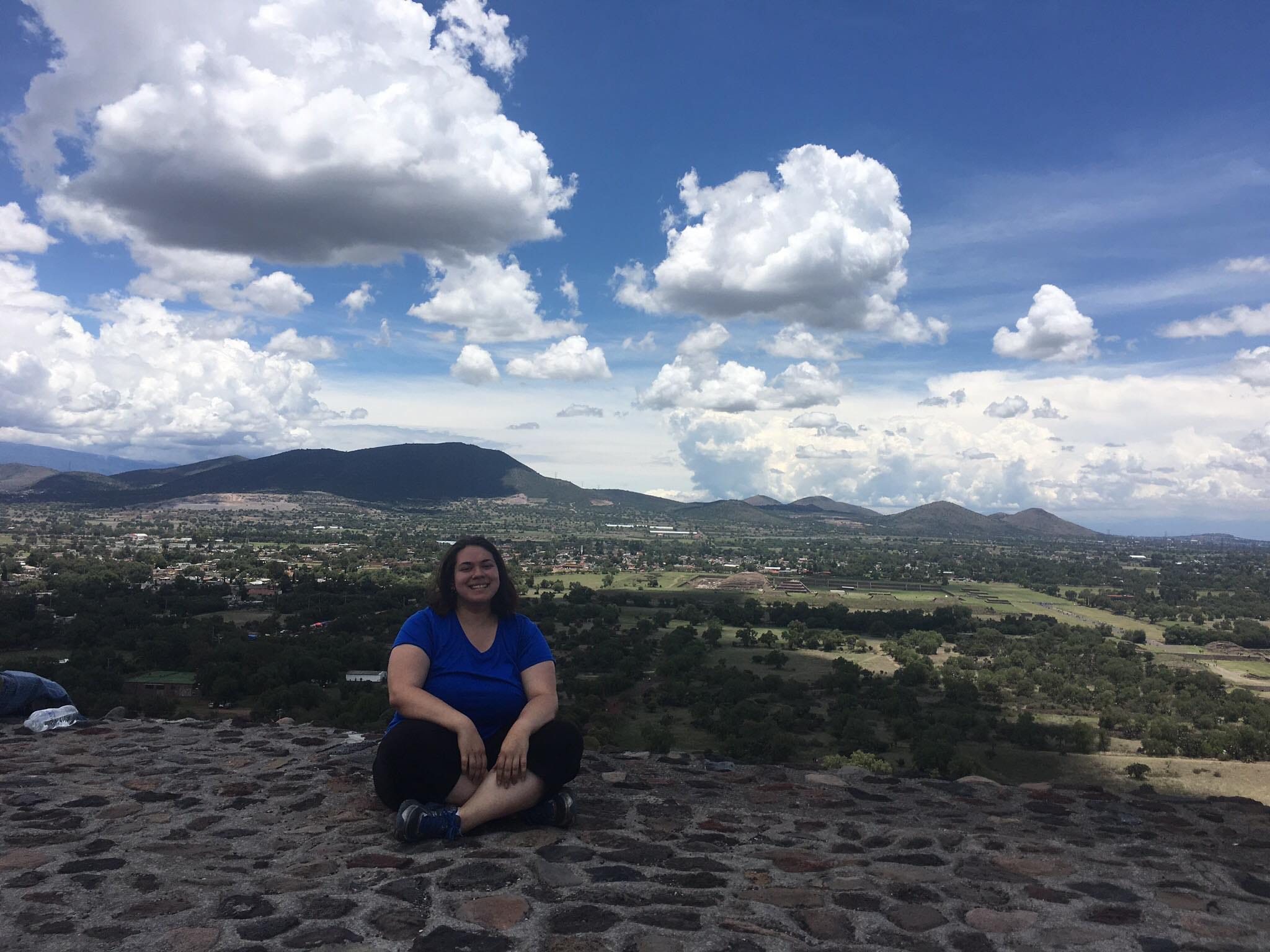
Tonight I, along with millions of viewers, watched Bad Bunny’s Super Bowl halftime show. I didn’t try to auto-translate as I watched. I just let the meaning surface whenever it could. “God bless America,” he said. Then he proceeded to name off every American country across the continents. He refused to be othered. I loved it. I felt it in my own spirit. I’m sure there will be plenty of articles dissecting the rich symbolism and history that was depicted. But all I could think about was how it shouldn’t be a courageous or radical act to sing in your native tongue. But it has been for so many. Generationally, it has been for my own family, which certainly isn’t a unique situation. I have a difficult relationship with the Spanish language. It isn’t my language even though I felt entitled to it for so much of my life. For me to feel included in any part of that performance, was a very big deal to me.
I have attempted to unpack those feelings many times as an adult. I wrote this piece seven years ago and read it in front of my ethnomusicology seminar as a final project. I am trying to resist whatever cringey feelings surface over it because I feel this represents something bigger than just me and my life. I’m putting it out there as the exact version I read in front of my class.
8 November 2018
Introduction
John Chernoff’s Hustling Is Not Stealing begins with the quote “To understand just one life, you have to swallow the world” from Salman Rushdie’s Midnight’s Children. This concept is illustrated beautifully throughout this text in which he captures the life and stories of a West African woman named Hawa. Chernoff objects to the idea of this being an autoethnographic work primarily because this woman is illiterate, and her words were transcribed by Chernoff. Still, I was inspired by this rich expansion of one woman’s life.
I took note of the glossary in the back of the book. Although the book is written in English, there are many words and terms that may not be familiar to someone who does not hail from the region- Ghana, Togo, and Burkina Faso. I started to think about how these types of colloquialisms can make someone feel isolated or even excluded. From there, I began to reflect on my relationship with the English and Spanish language. For many years, I felt excluded from my own ancestry in a way by not being fluent in Spanish or even having traveled to Mexico. It is fact that my mother is a Mexican-American woman, but can I claim this for myself in any capacity? I perceived this as a problem, and I sought to “fix” it.
I chose to write my own autoethnographic text, “Duality?”. It is a story and self-proclamation of the acceptance of my cultural identity crisis. It is structured in alternating sections of Spanish and English. It is a juxtaposition of both orthographic sound and thought. When I arrived in Mexico for a study abroad, it was truly the first time I had been around a group of people where the predominant language was not English. Considering my cultural heritage and background, I wanted to effectively show the paradigms through which I have experienced Mexico. I was there as a student, a descendant of Mexican ancestry, and a tourist (as much as I wanted to deny this). There were moments when I felt as though my grasp on the language was solid enough for me to think and occasionally even dream in Spanish. There were others where I resorted to English out of desperation or simply could not communicate properly, and I felt like a fraud. This journey would later cause me to reflect on my entire life, growing up in the South with a Mexican mother who did not speak Spanish fluently. I do recognize my story is not unique, and in my adult life, I have met many other people with similar backgrounds. Sometimes when you gather the courage to voice your experience, you learn that you are, in fact, not alone.
Duality?
Me llamo Kelly. Tengo 23 años. En el año 2017, yo fui a Cuernavaca, México para estudiar a la Universidad Internacional. Fue una decisión grande porque en la Universidad de Columbus State solamente tuve dos clases en español. Era una estudiante de música. Pasaba mucho tiempo en mi trabajo y la escuela de musica. Quise más. Quise un conneción con México. Tenía mucho miedo. La verdad es yo tengo mucho miedo ahora. Quiero hablar con mi corazón pero es una cosa muy difícil. Voy a tratar. [1]
I was a kid. We were in a Belk dressing room because that’s where the middle-class shop in the South. A frazzled-looking woman asked my mother a question in Spanish. My mother looked bewildered. She stumbled over her words, struggling to answer the woman in Spanish. I tried to encourage my mother, but she was embarrassed. She told me it’d been too long since she’d spoken Spanish. She told me she needed to get Rosetta Stone. She told me she needed to practice.
With a very white father and the last name “Cole”, I appear white enough on paper. To some, I physically appear ethnically ambiguous, which is something people make a point of noting when you live in the deep South. For most of my life, my Mexican family and my supposed heritage have been a mere story. I only have glimpses. I lived in Georgia far from my Californian family. There was a level of embitterment and estrangement that had nothing to do with anything I’d done but everything to do with how disconnected I felt from my extended family. When I was quite young, my mother revealed to me that my grandfather, Ricardo Soto Flores, had been harassed for speaking Spanish when he served in the United States Army. He was very insistent that my mother and her siblings speak English in school and in public. Consequently, my mother’s understanding of Spanish faded. This is something that would take me years to process. In the end, I realized it was a survival tactic. Out with the old; in with the new. En mi casa, nunca hablábamos español. A veces, yo estaba enojada o triste sobre esto.[2]
En el año 2004 mi abuelo se murio. Yo tenia 8 años. Mi familia fue a California. Fue una instancia rara. Yo recuerdo encontrando muchos primos. Yo recuerdo la sopa de menudo. No la comí pero yo la recuerdo. Yo recuerdo como mi madre trató a ser fuerte. Yo recuerdo como mi abuelo se apareció en su ataúd. En el mismo año mi familia cocinó tamales en memoria de mi abuelo. Es un proceso muy largo pero los tamales fueron muy deliciosos. [3]
In high school, people knew that I was Mexican because they knew my mother. My mother is short and tan with dark hair curlier than I could ever hope to have. She was very intent on being involved in my life, which at that time meant being a band mom. I had band friends who nicknamed me La Fuega, which is technically a made-up word since there is no feminine version of the Spanish word for fire, fuego. I liked that. I liked it a lot. It empowered me and made me feel like people were recognizing this somewhat concealed part of myself.
Still, I harbored guilt. I had only taken the bare minimum number of Spanish classes I needed in high school because I was too focused on music and AP classes. I enjoyed Spanish, but I never prioritized it. When I finally got around to taking Spanish in college, I was surprised at how much I retained but overwhelmed at how much I still didn’t know. This time, I was the embarrassed one. It felt like I was letting my ancestors down- ancestors I didn’t even know. I saw a study abroad in Mexico as an opportunity to somehow fulfill this requirement I’d bestowed upon myself.
Finalmente, yo fui a Mexico. Yo sentí libre. Yo vivía en una casa con la familia, Lazcano-Gomez. Yo caminaba las calles de Cuernavaca, Ciudad de México, Tepotzlan, Cuetzalán, and Puebla. Subrí las montañas y las piramides. Quería llorar para la vista. Nadí debajo de las Cascadas brisas. Estudie a la Universidad Internacional. Mis maestros y la familia Lazcano-Gomez tenían mucho paciencia con mi abilidad de hablar en español. Yo aprendí sobre la indígena y la verdad de la historía de México. Yo canté una canción “Eres Tù” enfrente de la escuela para una celebración. Yo se enseñé ingles a algunos niños Mexicanos. En realidad, los niños me enseñaron español a mi tambien. Yo fui a la casa de Frida Kahlo y se miré a los murales de Rivera in Palacio de Bellas Artes. Yo bailaba salsa y bachata. No bailaba bien pero no me importó. Yo bebía tequila y mezcal sin vergüenza. Yo comí chapulines de chile y limón. Yo era valiente. Yo era fuerte. Tenía una identidad nueva. Finalmente, yo conocí mi gente y mi cultura.[4]
And then I returned. And I still wasn’t fluent. I’m still not. I’m not sure if I’ll ever be. At times, I’ve lived in a state of constant self-judgement because of this. Even as I write this, I question if I’m revealing enough or too little. I question if my motivations are selfish or shallow. I have to remind myself that I am not on trial and the people sitting before me are not a jury. I’m not here to prove to you just how Mexican I actually I am. Although, at some point I may have been trying to prove that to myself. This is not something out of a textbook or an academic journal. This is a life. My life. Esta es una vida. Mi vida.[5]
[1] My name is Kelly. I’m 23 years old. In 2017, I went to Cuernavaca Mexico to study at Universidad Internacional. It was a huge decision because at Columbus State I had only taken two Spanish classes. I was a music student. I spent all my time at my job and the music school. I wanted more. I wanted a connection with Mexico. I was scared. The truth is that I’m scared right now. I want to speak with my heart, but it’s a difficult thing. I’ll try.
[2] In my house, we never spoke Spanish.
[3] In the year 2004, my grandfather died. I was 8 years old. My family went to California. It was a rare instance. I remember meeting many cousins. I remember the menudo. I remember how my mother tried to be strong. I remember the way my grandfather appeared in his casket. In the same year, my family made tamales in memory of my grandfather. It’s a long process, but the tamales were very delicious.
[4] Finally, I went to Mexico. I felt free. I lived in a house with the Lazcano-Gomez family. I walked the streets of Cuernavaca, Mexico City, Tepotzlan, Cuetzalan, and Puebla. I climbed the mountains and the pyramids. I wanted to weep for the sight. I swam under the waterfall. I studied at the Universidad Internacional. My teachers and the Lazcano-Gomez family were very patient with my ability. I learned about the indigenous and the truth of the history of Mexico. I sang a song “Eres Tú” in front of the escuela for a celebration. I taught English to some Mexican children. In reality, the children also taught me Spanish. I went to Frida Kahlo’s house and looked at Rivera murales in the Palace of Fine Arts. I danced salsa and bachata. I didn’t dance well, but I didn’t care! I drank tequila and mezcal without shame. I ate crickets. I was brave. I was strong. I had a new identity. Finally, I knew my people and my culture.
[5] This is a life. My life.